28 Years Later: The Bone Temple Review — A Worthy Sequel? (2026)
What’s It About
28 Years Later: The Bone Temple is the fourth entry in one of horror’s most enduring franchises — and the second half of what was always intended to be a duology. Following the events of 28 Years Later (also released in 2026), this film picks up the thread of a Britain that has spent nearly three decades rebuilding itself in the shadow of the Rage virus. Civilisation has returned, but only in the loosest sense: communities are fractured, old institutions have been replaced by something stranger and more desperate, and the infected — while no longer the plague they once were — are never entirely forgotten.
The Bone Temple narrows its focus inward, away from the sprawling societal canvas of its predecessor and into something more claustrophobic and personal. The tagline says it all: “Fear is the new faith.” At the centre of the story is a survivor community that has organised itself around quasi-religious rituals — rites of survival transformed over decades into something dogmatic and, increasingly, sinister. When an outsider is drawn into this world and begins to question what holds the community together, the cracks beneath the surface start to show. It is a film as interested in what humans do to each other in the name of safety as it is in the infected lurking beyond the walls. Fans of the franchise will recognise that impulse immediately — it was always what made 28 Days Later so special.
The Verdict
Danny Boyle’s original 28 Days Later is one of the most important horror films ever made. It did not just redefine the zombie subgenre; it asked serious questions about what survival costs us. Any sequel to that legacy carries a heavy burden, and The Bone Temple carries it with more grace than I expected. The franchise has always been less interested in gore for its own sake and more invested in the texture of collapse — how people organise, what they believe, who they become when the systems that once defined them are gone. The Bone Temple leans hard into that tradition, and largely succeeds.
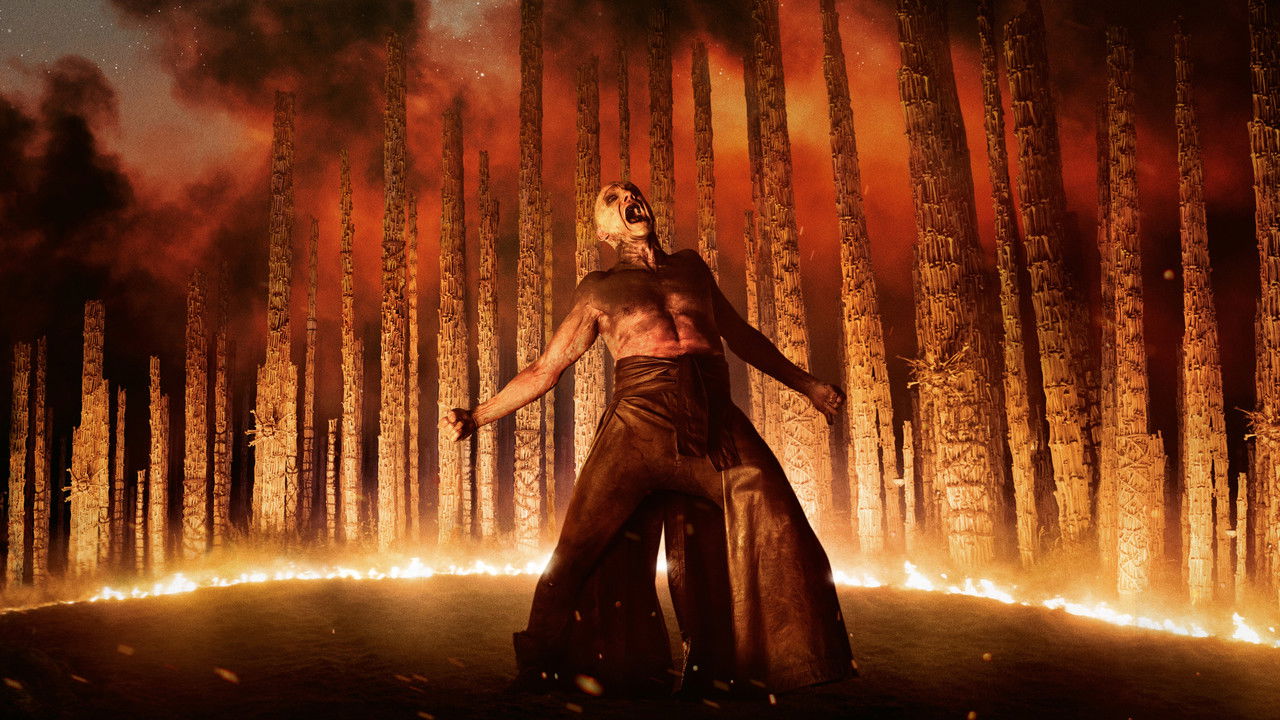
The cult-adjacent community at the heart of the film is genuinely unsettling. There is a slow, creeping dread to the way their customs are revealed — what appears at first as quirky tradition gradually reveals itself as something coercive and dark. The film earns its tension the hard way, through atmosphere and character rather than cheap jump scares. When horror does arrive, it lands with real weight. The practical effects work is excellent — the infected here look genuinely wrong in a way that CGI-heavy horror rarely manages — and there are two or three sequences in this film that I think will stick with audiences for a long time. One chase sequence in particular, set across a waterlogged industrial ruin at night, is about as pure and effective a piece of horror filmmaking as you will see this year.
Where it stumbles, if I am being honest, is in the second act. The original 28 Days Later had a lean, almost ruthless efficiency to its storytelling. The Bone Temple is a bigger, more ambitious film, and that ambition occasionally curdles into bloat. There is a subplot involving a character from the previous film that feels like it belongs in a different, shorter movie, and some of the cult’s internal politics are sketched in broad strokes when they deserved more careful development. The predictability that creeps in around the 70-minute mark is noticeable for anyone who has seen enough films in this genre. You will see certain beats coming from a considerable distance.
There is also an unavoidable sequel-itis quality to parts of The Bone Temple — a sense that it is working very hard to remind you how much you loved the original rather than trusting itself to stand on its own merits. References and callbacks accumulate to a point where they risk feeling like pressure rather than affection. The best moments in this film are the ones where it forgets to be reverential and just gets on with being terrifying.
Who’s It For
If you are a fan of 28 Days Later and 28 Weeks Later, The Bone Temple is a must-see — with the caveat that you should watch 28 Years Later first. This is very much the second half of a story, and arriving without that context will leave you scrambling to catch up. For franchise devotees, though, there is plenty here to satisfy. The film shares the franchise’s DNA in all the ways that matter: the infected are terrifying, the human drama is given genuine weight, and the world-building has that particular flavour of grimy, plausible British apocalypse that no American production has ever quite managed to replicate.
Beyond the existing fanbase, this film will appeal strongly to anyone who responded to The Last of Us — especially its focus on post-collapse community dynamics and the moral compromises survival demands. Fans of A Quiet Place will appreciate the way it uses silence and space to generate tension, and if World War Z scratched an itch for you, The Bone Temple is operating in similar territory but with more craft and considerably less studio polish. One note for Australian audiences sensitive to horror intensity: this is not a light watch. The violence is not gratuitous, but it is real, and the film sustains an atmosphere of genuine dread for most of its 109-minute runtime. Go in prepared.
Where to Watch in Australia
As of February 2026, 28 Years Later: The Bone Temple is playing in Australian cinemas following its 14 January release. If you have not caught it yet, there is still time — check your local cinema’s session times, as it is holding screens in most major chains. Standard ticket prices in Australia typically run around $22 to $25 for a general admission adult ticket, with some premium formats (IMAX, Dolby) commanding a few dollars more.
For those who prefer to wait for home viewing, you will likely not have to wait long. Based on the distribution trajectory of the broader 28 Years Later universe and typical theatrical-to-streaming windows for horror releases in Australia, I would expect The Bone Temple to land on streaming within three to six months of its theatrical run. Stan or Prime Video are the most probable destinations given historical distribution patterns for this kind of mid-to-high budget horror release — Stan in particular has been a reliable home for horror in the Australian market. Keep an eye on both. If you are on the fence, the cinematic experience is worth it for that waterlogged industrial sequence alone — it plays better in a dark room with the sound cranked.
Our Rating
7/10 — 28 Years Later: The Bone Temple is a solid, often genuinely frightening addition to one of horror’s best franchises. It does not surpass 28 Days Later — very few horror films in the last twenty-five years have — but it does not embarrass it either. The cult mythology gives the film a distinctive identity within the series, the practical effects are outstanding, and when it fires on all cylinders the tension is almost unbearable in the best possible way. Some bloat in the second act and a few too many winks at the audience hold it back from greatness, but for horror fans who have been with this franchise since the beginning, The Bone Temple delivers genuine thrills and earns its place in the canon. Get to a cinema while you can, or mark it for the watchlist — either way, do not sleep on it.
Get Weekly Streaming Picks
Every Friday, we tell you what to watch this weekend in Australia. Free, no spam, unsubscribe anytime.